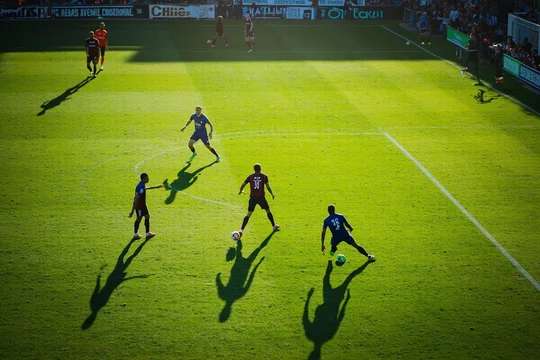
While often dismissed as a historical relic of hyper-defensive negativity, the structural foundations of Catenaccio underpin modern defensive theory. The Italian tactical philosophy was an exercise in deliberate spatial denial and calculated risk management rather than uncoordinated numbers behind the ball. The sweeper, positioned as an insurance policy to mop up secondary balls and neutralize line-breaking runs, has evolved rather than disappeared from elite coaching manuals. Contemporary defenses replicate this deep cover through staggered center-back pairings, inverted full-backs tucking inside, and disciplined low-block compactness. By systematically contracting the vertical and horizontal gaps between lines, modern coaches force opponents away from central channels and into low-probability crossing zones, mirroring the classic blueprint of frustrating possession-heavy systems through spatial economy.
The influence of this tactical lineage extends beyond static low blocks and informs how elite teams defend during possession. The modern concept of rest defense, where central defenders and holding midfielders position behind the ball while attacking to extinguish counter-attacks at their inception, descends directly from this focus on transition prevention. Furthermore, the rigid individual tracking that once defined the system has merged with modern zonal theory to produce hybrid marking schemes. Contemporary pressing structures frequently use zonal triggers combined with situational man-orientations, requiring defenders to aggressively match running lanes while maintaining the integrity of the collective block.
Deconstructing the Sweeper and Deep Cover
In the classical Italian defensive paradigm, the sweeper was an unbound operator deployed directly behind a disciplined line of strict man-markers. While primary defenders engaged in individual territorial duels to neutralize assigned attackers, the sweeper maintained complete positional freedom, tasked with reading passing angles, intercepting loose balls, and rectifying structural breakdowns. This tactical arrangement generated an engineered numerical surplus in the penalty area, ensuring that an attacking breakthrough rarely led directly to an uncontested shot. Rather than confronting ball-carriers directly, the traditional deep cover operator relied on calculated retreat, slowing down the opposition's forward momentum while orchestrating the spatial recovery of the defensive block.
Contemporary tactical frameworks have largely eliminated the static sweeper due to the offside trap and modern pressing triggers, yet deep cover remains a foundational element of defensive coaching. Modern systems simulate this surplus defensive layer through coordinated rotations rather than a solitary individual. Coaches regularly instruct a holding midfielder to drop between the central defenders as a roving protector, or direct the ball-distant fullback to tuck inside to cover space vacated by an engaging teammate. Goalkeepers stepping out to intercept long passes behind a high defensive line also reflect sweeper mechanics adapted for modern play.
Low-Block Compactness and Space Denial
The modern low block is rooted in the spatial rationing pioneered by traditional Italian defensive frameworks. While historic iterations achieved defensive solidity through strict man-to-man assignments and a dedicated sweeper behind the primary line, contemporary coaches translate that philosophy into compact zonal structures. The objective remains the reduction of playable space in the defensive third, particularly within the central channel and the zone directly outside the penalty area. Teams execute this by compressing the vertical distance between the defensive line and the midfield unit, often restricting the gap to fewer than fifteen meters. This density prevents attacking playmakers from receiving possession on the turn between lines and forces the opposition to circulate the ball along the periphery rather than penetrating central territory.
Effective execution of this containment strategy relies on synchronized lateral shifting and collective discipline rather than individual physical superiority. As the opposition moves the ball across the pitch, the defending block slides as a cohesive unit, concentrating its defensive mass toward the active side while leaving the far flank open to bait predictable, long-distance switches of play. The primary mandate of the central defenders and holding midfielders within this shape is to protect the width of the penalty box, conceding wide crossing positions where the defending unit holds structural and numerical advantages. By neutralizing through-balls and sacrificing field tilt in exchange for structural integrity, contemporary coaches ensure that sustained possession yields minimal high-probability scoring chances, preserving the strategic risk-mitigation principles of the classic tactical model.
Rest Defense and Transition Prevention
The modern concept of rest defense shares its operational philosophy with the foundational architecture of classic Catenaccio, which prioritized structural insurance above all else. In traditional systems, the sweeper provided an unyielding safety net behind an aggressive marking contingent, tasked with eliminating threats that emerged from broken play. Today, this principle manifests during sustained phases of possession, where teams organize the positioning of players behind the ball to prepare for an eventual turnover. Rather than deploying a solitary defender detached deep on the pitch, modern defensive frameworks deploy staggered units, typically composed of central defenders and holding midfielders, to control central spaces, mirror opposing transition outlets, and maintain numerical superiority against prospective counter-attacks.
Preventing offensive transitions requires pre-emptive positioning matched with immediate spatial compression. Where historical systems neutralized direct routes to goal through disciplined positional alignment, modern transition prevention denies opponents the time and vision needed to launch vertical attacks. When possession is lost, the pre-established rest defense allows the collective unit to either execute a targeted counter-press or track runners while funneling play toward low-risk peripheral zones. Maintaining structural stability as an active condition rather than a reactive scramble, the defining principle of Catenaccio, remains a practical blueprint for managing game state and neutralizing opposing threats.
Hybrid Marking in Contemporary Pressing Schemes
While traditional Catenaccio relied on rigid individual tracking anchored by a free sweeper, modern coaching adapts the system through hybrid schemes that shift between zonal coverage and targeted man-orientation. Contemporary defensive units establish compact zonal baselines that activate player-oriented pressing duties upon specific positional triggers. In the middle third, attacking midfielders and wingers jump into tight man-marking to disrupt opposing pivots and central progression lanes, while the defensive line remains zonal to manage space behind them. This structural duality closes passing lanes without destabilizing collective shape, denying space to key playmakers before attacking sequences gather momentum.
The direct lineage of the defensive sweeper persists in how modern hybrid schemes maintain an intentional numerical surplus in the final defensive layer. As advanced midfielders engage in man-to-man pressing duels across the pitch, the central defenders execute complementary roles: one steps forward to challenge an opposing receiver directly, while the remaining defender drops to act as a dynamic cover mechanism. This rotational asymmetry mitigates the vulnerability of pure man-marking, preventing fluid attacking rotations from pulling the entire defensive unit out of shape. By deploying man-to-man responsibilities within a broader zonal framework, coaches preserve the principles of individual accountability and deep layer protection that originally defined the Italian blueprint, adapting them to the speed and fluid interchanges of the contemporary game.
Conclusion
The traditional sweeper has evolved into concepts of deep cover and staggered central lines, while space denial remains visible in the geometry of modern low blocks. By combining selective man-to-man duties with collective zonal parameters, hybrid marking schemes maintain balance against fluid attacking movements.