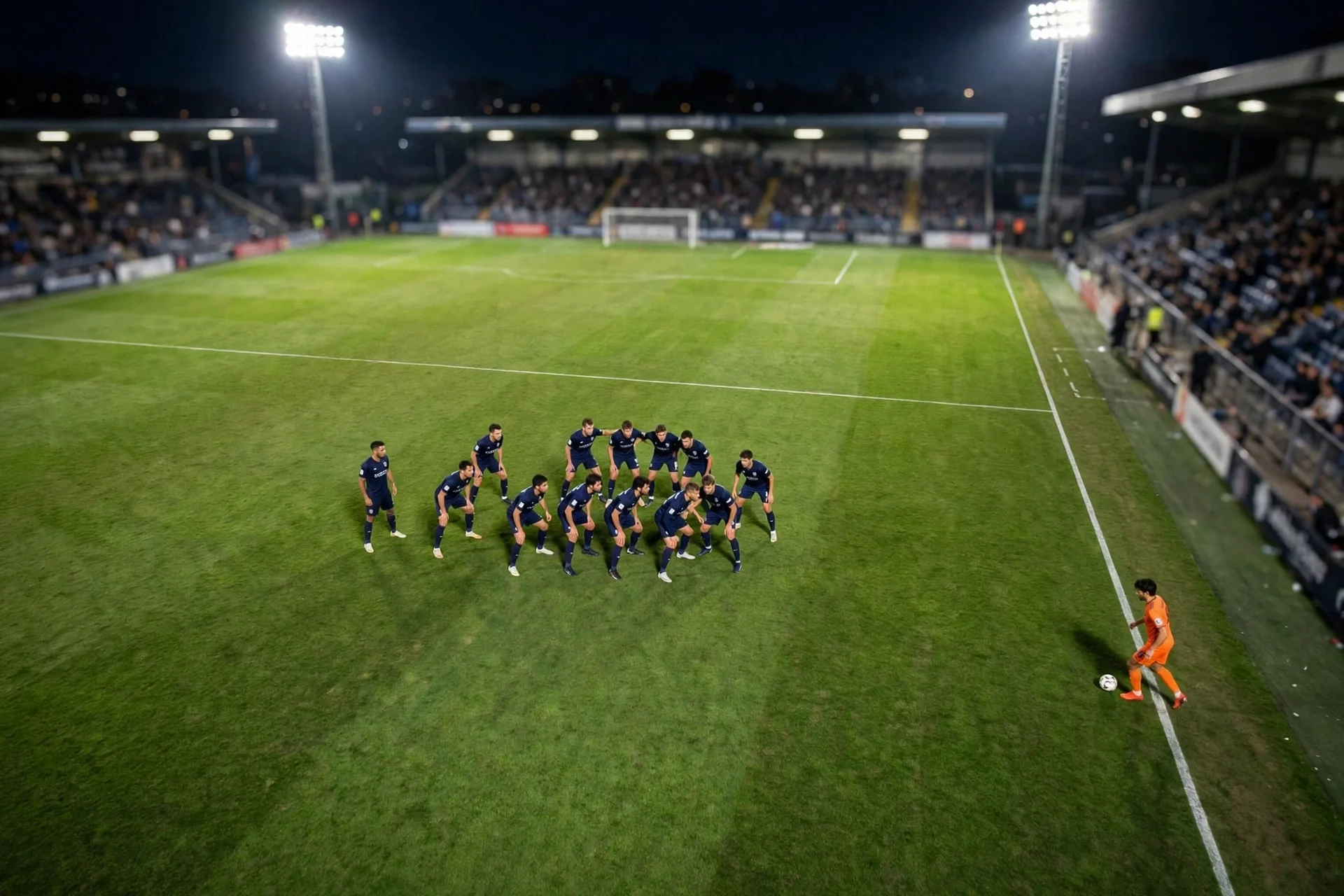
Possession metrics often obscure how teams control matches. While prolonged phases with the ball project authority, a team can dictate play with equal precision by manipulating space. This approach relies on horizontal and vertical compactness through structured defensive blocks, denying access to central corridors and the space between the lines. A coordinated unit shapes the opponent’s progression through pressing traps, inviting passes into targeted channels before closing down the ball carrier to make possession predictable and fragile.
This spatial structure also creates opportunities for offensive transitions. By drawing the opposition forward and attacking the vacated space left behind, a disciplined side can execute rapid, vertical counter-attacks that bypass defensive layers before a recovery structure forms. Territorial control dictates the tempo and geography of the match, neutralizing attacks while conserving energy for decisive moments.
Establishing Compactness Through Structured Defensive Blocks
The foundation of non-possession control lies in the synchronized organization of defensive units into cohesive blocks, typically configured in low- or mid-block structures. A compact structure prioritizes denying central space between the lines of defense and midfield over contesting every phase of build-up play. Achieving this requires strict adherence to vertical and horizontal distances, with elite defensive systems rarely allowing more than thirty to thirty-five meters of separation from the central defenders to the central forwards. By compressing the pitch both lengthwise and widthwise, the defensive unit reduces the operating area available to the opposition, rendering short, penetrating passes through the center of the pitch unviable.
When executed properly, this spatial compression alters the opposition's attacking geometry, compelling them into predictable patterns of circulation. Ball progression is funneled toward the flanks, where the touchline acts as an extra defender and the risk of conceding high-probability scoring chances is minimized. Within the block, players shift laterally in unison according to the ball’s trajectory, maintaining balance on the weak side while congesting passing lanes on the strong side. This structured positioning sets a trap, establishing specific engagement zones where a poorly weighted pass or heavy touch can be exploited through coordinated recovery and counter-attacks.
Manipulating Opponent Progression With Pressing Traps
Pressing traps rely on the deliberate illusion of open space, functioning as a tactical mechanism to guide the opposition's build-up into predetermined zones of vulnerability. Rather than aggressively closing down every passing option indiscriminately, a well-structured defensive unit maintains a compact block that intentionally leaves specific passing lanes seemingly available. Most commonly, defending sides funnel play toward the touchline, using the boundary as an auxiliary defender to eliminate half of the ball-carrier's potential passing angles. Alternatively, sophisticated setups employ central traps, enticing a pass into an opposing pivot or attacking midfielder by temporarily masking the proximity of supporting defensive coverage. Through calculated body orientation and precise cover shadows, the defensive team removes high-value progressive routes, systematically directing the ball into areas where the defensive unit holds a decisive numerical or positional advantage.
The operational success of a pressing trap depends entirely on collective synchronization and the recognition of specific triggers. When the opponent commits to the targeted pass, often dictated by cues such as a ball played to a receiver facing their own goal, an awkward first touch, or a slow lateral distribution, the surrounding defensive structure contracts simultaneously. The nearest defenders aggressively close the receiver's turning radius, while adjacent players step up to eliminate immediate backward or lateral escape outlets. This sudden compression transforms an apparently safe phase of possession into an acute state of spatial suffocation. By dictating where, when, and how the opponent advances, the out-of-possession side maintains strategic control over the pitch, creating turnover scenarios that translate directly into rapid counter-attacks.
Weaponizing Spatial Vacancies in Direct Transitions
When a side deliberately operates without the ball, its defensive compactness forces the attacking team to advance bodies forward to break down the structure. As the possession-dominant side commits full-backs to wide attacking zones and pushes central midfielders into advanced pockets, they inevitably vacate vast expanses of the pitch directly behind them. Controlling the match in this state involves actively shaping where these vacancies appear. By shifting the defensive block laterally or artificially congesting the central channel, the defending team baits the opponent into overcommitting players toward specific zones. This structural imbalance leaves the defensive transition of the attacking side compromised, creating artificial space that exists precisely because the defending unit refuses to contest territory high up the pitch.
Exploiting these vacancies occurs in the initial seconds following a turnover, prioritizing immediate verticality over sustained ball circulation. Rather than resetting through passive possession, the recovering side uses pre-planned running lanes and direct distribution to bypass the opponent's counter-press. A ball-winning central midfielder or deep-lying playmaker immediately targets the channels vacated by advanced full-backs, releasing dynamic wingers or transitional forwards into open footraces against isolated central defenders. By coordinating blind-side runs into the space between the opponent’s recovering midfield and back line, the counter-attacking side achieves numerical or qualitative superiority before the opposition can reorganize. Territory is gained by exploiting the space the opponent was induced to abandon.
Dictating Tempo Through Disciplined Territorial Management
Territorial management without the ball relies on reducing playable space rather than contesting every pass. By establishing a compact mid-block or low-block defensive structure, a team systematically denies access to the central corridors and the space between the lines where dangerous progression occurs. The defending unit maintains rigid vertical and horizontal distances between its units, shifting laterally in synchrony with the ball's movement. This positioning forces the attacking side into a predictable, U-shaped circulation pattern along the perimeter of the defensive shell. Denied interior passing angles and vertical depth, the side in possession is compelled to exchange low-risk, horizontal passes across their own back line and into wide areas. Consequently, the rhythm of the match slows to a cadence dictated by the defensive shape, which neutralizes the opposition's creative playmakers despite their high possession metrics.
Spatial dominance emerges in how a defending side manipulates the opposition into designated pressure traps. Rather than retreating passively, a disciplined block deliberately leaves specific, low-leverage passing lanes open, typically toward an isolated fullback or a backward-facing midfielder near the touchline. The moment the ball travels into these predetermined zones, the defensive unit shifts from containment to an aggressive collective squeeze, collapsing space around the receiver and eliminating escape routes. This transition transforms opponent possession into a high-risk scenario. By predetermining where the opponent can advance and choosing the coordinates to contest the ball, the defending team governs when the match accelerates and decelerates, turning territorial concession into structural control.
Conclusion
Match control comes from the deliberate governance of space. By establishing structured defensive blocks, teams restrict access to dangerous central channels and funnel opponent progression into targeted pressing traps. This organization turns defensive phases into proactive strategies, ensuring that the team without the ball dictates where and how the opposition is permitted to advance.
Exploiting spatial vacancies transforms defensive stability into an immediate offensive threat through rapid, direct transitions. Paired with disciplined territorial management, this framework allows a side to regulate match tempo on its own terms.