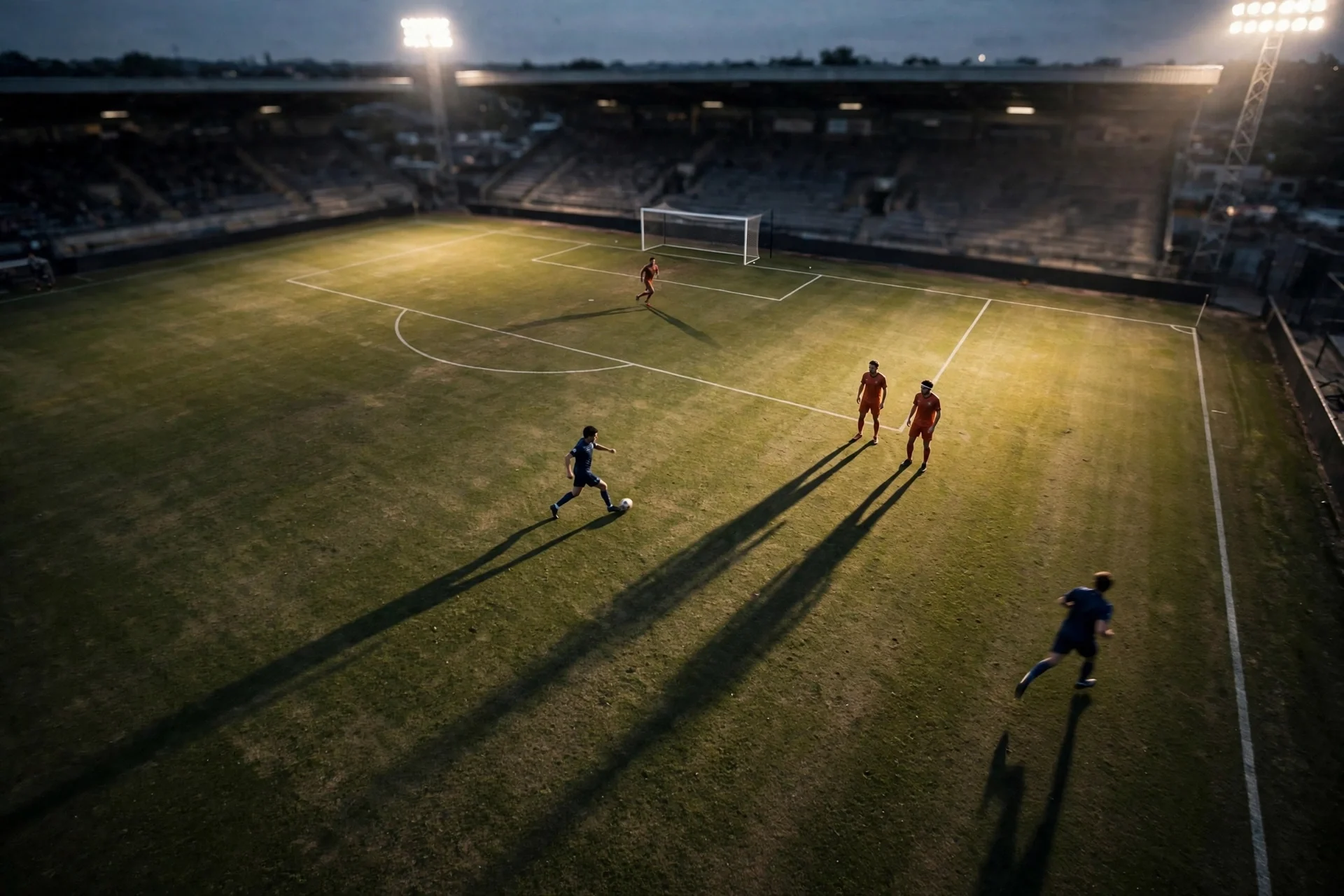
The false nine prioritizes positional fluidity over traditional focal play, retreating into the space between the opposing midfield and defensive lines. This withdrawal creates a problem for central defensive pairings, whose defensive principles rely on defined reference points and man-oriented coverage. When a center-back follows the retreating forward, gaps emerge across the defensive line; when the defender holds position, the false nine has time to turn, survey the pitch, and orchestrate attacking sequences from an advanced midfield position.
By vacating the central attacking zone against compact, low defensive blocks, the false nine creates lanes for direct wingers and overlapping central midfielders, who exploit the space through vertical and diagonal runs. Against entrenched defenses built to absorb direct aerial duels, the role introduces passing angles and rotations that shift the block's orientation and break the horizontal compactness deep-lying opponents rely on to protect their penalty area.
Manipulating Space Between Midfield and Defense
The primary tactical mechanism of the false nine relies on exploiting the vertical corridor between an opponent's midfield and defensive lines. By abandoning the traditional role of anchoring against the center-backs, the player deliberately vacates the highest line of attack to drift into the pocket of space traditionally occupied by an attacking midfielder. This movement forces an immediate cognitive dilemma upon the opposition's central defenders. If a center-back follows the forward up the pitch to maintain tight coverage, the defensive line becomes fragmented, leaving significant gaps behind them. Conversely, if the defenders choose to hold their zone, the false nine receives the ball with ample time and space to turn toward goal, effectively functioning as an extra playmaker in a critical central zone.
This disruption alters the numerical balance in the center of the pitch, creating artificial overloads against the opponent's defensive midfielders. Because the defending midfield unit is typically occupied with opposing central midfielders, the arriving false nine introduces a surplus passing option that is difficult to neutralize without sacrificing structural compactness. As the opposition shifts inward or steps out to contest this free player, peripheral teammates execute complementary movements. Inside forwards, diagonal wingers, and late-running central midfielders attack the depth directly into the channels vacated by the compromised back line. The false nine then operates as an extra midfielder, threading progressive passes into these blind spots to dismantle compact defensive blocks from within.
Disrupting Traditional Central Defensive Pairing Roles
Traditional central defensive partnerships rely heavily on fixed spatial reference points and clear structural responsibilities, typically dividing duties between an aggressive marker and a covering partner. When an opposing forward operates as a false nine, these conventional dynamics deteriorate. By retreating into the space between the opponent’s defensive and midfield lines, the nominal striker deliberately removes the physical reference point that centre-backs are conditioned to track. This movement presents the central defenders with a persistent tactical dilemma: step out of the back line to follow the dropping player, or maintain the defensive shape and concede uncontested possession in dynamic central areas. Stepping out fractures the offside line and opens immediate vertical gaps, while holding position grants the false nine sufficient time and space to turn, scan the pitch, and distribute the ball forward.
The structural breakdown intensifies when a defender chooses to break the line to follow the forward, shifting defensive responsibilities into an ambiguous zone between the back line and the defensive midfield. The remaining central defender is left without a direct opponent to mark, forced into an awkward compromise between sliding across to provide lateral cover and protecting the central corridor. This positional friction enables supporting attackers, such as inverted wingers driving inside or central midfielders executing third-man runs, to attack the vacated space directly behind the committed defender. The defensive pairing is stripped of its natural numerical security and mutual coverage, transforming a traditionally cohesive unit into isolated individuals forced into reactive, uncoordinated decision-making against penetrating runs from deep.
Enabling Direct Wingers and Overlapping Midfielders
When a central striker vacates the traditional focal point to drop into the space between the opponent's defensive and midfield lines, the opposing center-backs face an immediate structural dilemma. Tracking the forward deep pulls a defender out of position and opens massive gaps in the defensive spine, while holding the line concedes an uncontested numerical overload in central areas. Direct wingers serve as the primary spatial beneficiaries. Instead of remaining on the flanks to provide wide crosses, these wingers cut diagonally inside, targeting the central space vacated by the false nine. The dropping forward draws defensive attention before releasing incisive through-balls into the path of these diagonal runners, converting wide attackers into the team's primary goal threats.
Beyond releasing wide runners, this positional manipulation creates regular penetrating channels for late-arriving central midfielders. When an opposing defensive midfielder steps up to track the false nine, the vertical compactness of the defensive block breaks down, leaving the half-spaces exposed. Box-to-box midfielders can then execute delayed forward bursts from deep, attacking the penalty area untracked. Because the defensive line is already consumed with managing the diagonal runs of inverted wingers, picking up a third-man run from midfield requires split-second communication that is difficult to sustain over ninety minutes. An isolated target man provides predictable aerial presence; the false nine system instead relies on multi-directional runs that disorganize low and mid-blocks alike.
Breaking Down Compact Low Defensive Blocks
When an opposition team deploys a compact low block, the central penalty area becomes an intensely congested space where physical resistance is maximized. Traditional center-forwards often find themselves neutralized in these setups, isolated against deep-sitting defenders who are structured to dominate aerial duels and clear repetitive crosses. The false nine counteracts this containment strategy by refusing to occupy the primary zone of defensive focus. By retreating into the space between the opponent’s defensive and midfield lines, the forward presents the central defenders with a difficult structural dilemma. The defenders must either break their line to follow the movement, which fractures their low block and creates vulnerable central gaps, or hold their zonal positions, which gifts the attacking side uncontested numerical superiority in the central buildup phase.
This spatial manipulation creates the structural conditions necessary for dynamic third-man combinations. As the false nine draws the attention of the opposition's defensive midfielders, passing angles open up for teammates to exploit. Inverted wingers and advancing central midfielders can make diagonal runs into the vacated forward space, attacking the penalty area at speed rather than starting from static positions. Furthermore, the presence of an extra passing option in deep areas allows the attacking side to circulate possession patiently, shifting the defensive block laterally until an opening appears. Rather than attempting to overpower a packed penalty box through direct force, the false nine unpicks the low block through collective movement, patient ball circulation, and spatial disorganization.
Conclusion
The false nine works by abandoning the central attacking station to operate between midfield and defensive lines. Opposing center-backs must choose between stepping out to mark him or conceding possession. The withdrawal disrupts conventional defensive pairings and removes their expected reference point. It creates central numerical advantages that let the attacking team control tempo, challenging the spatial logic of modern defending.
The space vacated centrally opens diagonal lanes for inverted wingers and gives overlapping midfielders room for late penetrative runs. Against low blocks designed to deny vertical depth, the positional rotations produce unpredictable angles of attack.