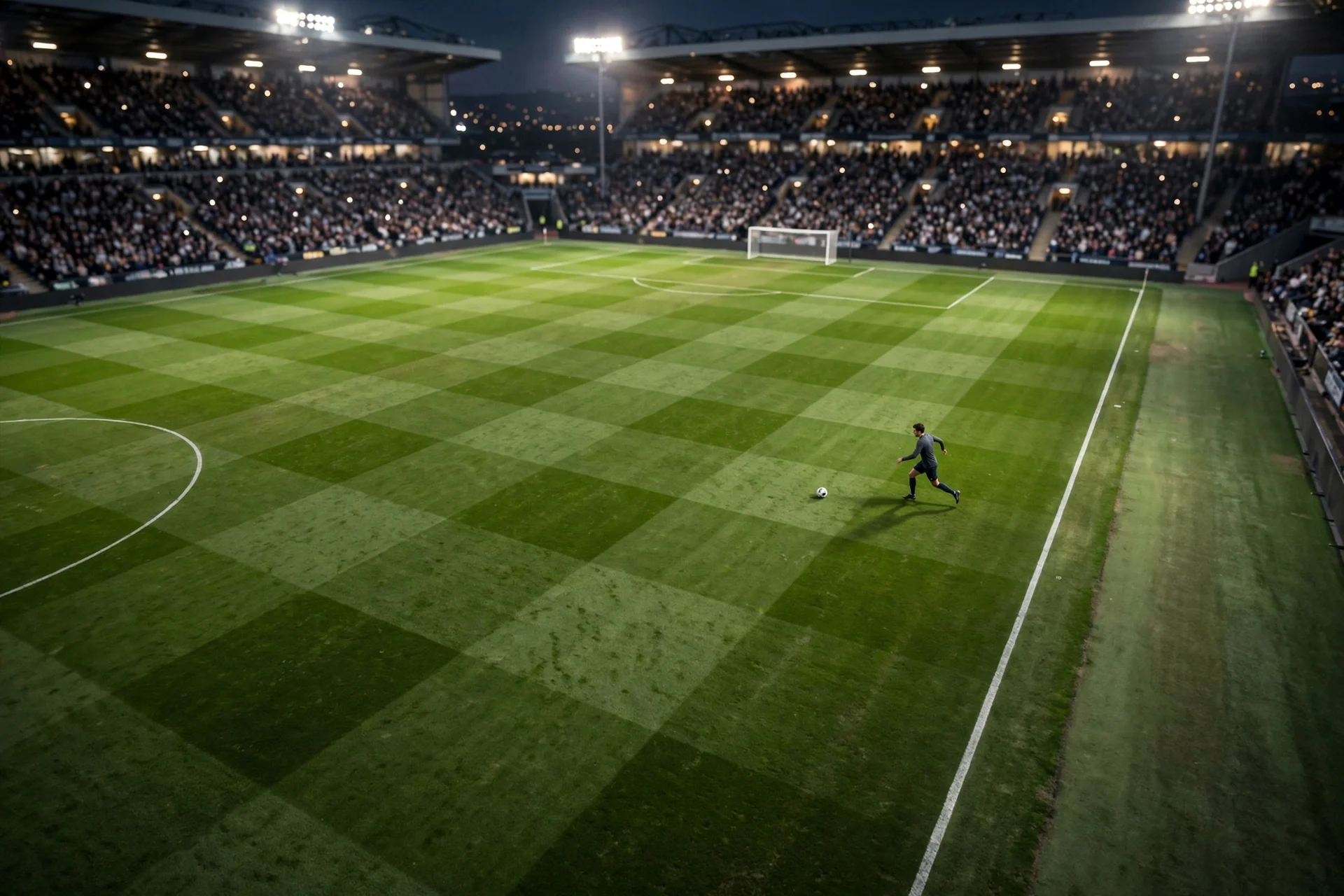
The inverted full-back has changed possession patterns in the Premier League. Instead of overlapping along the touchline, these players drift into central midfield during build-up. This movement creates numerical overloads centrally, giving clean passing angles to bypass aggressive forward presses and control territory. Vacating the flank leaves wingers pinned high and wide, isolating them for one-on-one duels without congestion.
Beyond ball progression, this realignment helps suppress transitions and build a rest defense. By occupying central channels while the team attacks, inverted full-backs form a compact barrier just outside the opposition penalty area, enabling immediate counter-pressing and stopping vertical counter-attacks at source. However, this asymmetry opens structural vulnerabilities, most notably the wide space behind the advancing full-back. Opposing coaches target these corridors with rapid cross-field switches and direct channel runs, forcing the defending side into lateral shifting from center-backs and cover from holding midfielders.
Creating Central Overloads in Build-Up Play
The primary tactical mechanism behind the inverted full-back is the deliberate alteration of structural geometry during the first phase of possession. Rather than advancing along the touchline in the traditional manner of an overlapping defender, the player steps inside to occupy the half-spaces or sit directly alongside the primary defensive midfielder. This movement typically transforms a conventional back four into a temporary three-man defensive foundation supported by a central double pivot. By introducing an extra passing option into the middle of the pitch, the team creates an immediate numerical superiority over the opposition's first and second pressing lines. Opponents structured to press in standard mid-block systems, such as a flat four-man midfield or a three-man central unit, are suddenly outnumbered, which significantly reduces their ability to cut off central passing angles or apply cohesive pressure without surrendering territorial control.
This artificial central overload forces the defending side into structural compromises that dictate the rhythm of the build-up. If the opposition wide midfielders tuck inside to assist their central unit, they surrender vast swathes of space on the touchline, allowing direct diagonal switches to isolated wingers who can exploit one-on-one scenarios. Conversely, if the opposition central midfielders step out to engage the inverted full-back, vertical passing corridors open directly into the feet of advanced interior playmakers operating between the lines. This localized congestion also helps defend. By concentrating technically proficient players in the central corridor immediately beneath the ball, the attacking team establishes an inherently compact rest-defense structure that can immediately counter-press and suffocate transitional counter-attacks at their point of origin.
Rest Defense and Transition Suppression
The primary defensive utility of deploying an inverted full-back lies in the structural reinforcement of the team's rest defense during sustained spells of possession. In conventional systems, full-backs routinely advance along the touchline, creating expansive wide channels behind them that opponents can readily exploit via direct counter-attacks. When a full-back tucks inside to operate as a complementary central midfielder, the team establishes a compact platform, typically forming a three-two or two-three foundational shape behind the attacking line. This central congestion immediately clogs the most direct vertical lanes into the opposition's playmakers and forwards. By occupying these half-spaces ahead of the central defenders, the inverted player minimizes the physical distances between defensive units, ensuring that a turnover does not leave the back line exposed to direct numerical overloads.
This positional proximity transforms transition suppression by enabling immediate and aggressive counter-pressing. Rather than sprinting back over vast expanses of open grass, the inverted full-back is already situated within striking distance of the ball, allowing them to apply immediate pressure the moment possession is lost. Even when the initial counter-press does not yield an outright recovery, the presence of multiple central defenders funnels the opposition's exit routes away from the center and out toward the touchlines. Forcing transitional attacks into wide, low-threat corridors grants the defensive unit time to reorganize, while allowing sweeping center-backs to use the sideline as an extra defender. Over the course of a match, this mechanism dampens high-danger breakaways, curbs the physical toll of continuous recovery sprints, and sustains long periods of territorial pressure.
Unlocking Natural Wingers in Isolation
The shift of a full-back from the flank into central areas reorganizes defensive structures, directly benefiting traditional, wide-positioned wingers. In conventional systems, overlapping full-backs provide width, but their forward runs often invite a second defensive marker into the wide channel, thereby compressing the space available for creative wing play. Conversely, when an inverted full-back moves into the half-space or joins the midfield pivot, the defending team faces an immediate dilemma. The opposition wide midfielder must either tuck inside to prevent a central numerical overload or remain wide to support their own full-back. In most defensive schemes, central compaction takes precedence, which strips the defending full-back of auxiliary cover and vacates the wide corridor entirely.
This positional shift systematically creates high-value isolation scenarios for natural wingers who excel in one-versus-one situations. By holding the touchline alone, the attacking winger receives diagonal switches of play with the time and space required to build momentum against an isolated defender. Without an overlapping teammate occupying their immediate running lane or dragging an extra marker into the fray, the winger possesses dual threats: attacking the outside to deliver low cutbacks from the byline, or cutting inside toward the vacated half-space to shoot. This spatial clarity improves the effectiveness of specialist dribblers, turning theoretical territorial possession into direct, high-percentage attacking phases.
Structural Vulnerabilities and Tactical Countermeasures
While shifting a full-back into the central midfield creates territorial dominance, it inherently compromises the defensive structure during sudden changes of possession. The most immediate liability is the vacant space left along the touchline. In modern defensive transitions, the lateral corridor normally protected by the full-back remains deserted, forcing the nearest wide center-back to slide across and defend expansive half-spaces. This lateral shift stretches the remaining central defenders, widening the seams between them and creating dynamic attacking channels for opposition runners. Furthermore, if the inverted full-back turns the ball over within the congested central zone, the team's rest defense is compromised at the most vulnerable focal point of the pitch, offering the opponent a direct, unobstructed path toward the penalty area before a coherent defensive shape can be restored.
Opponents routinely develop counter-strategies designed to exploit these spatial imbalances, predominantly using mid-block pressing traps and direct vertical release passes into the vacated flanks. By allowing the full-back to drift inside, the defending unit baits passes into crowded areas before initiating aggressive double-teams, immediately targeting direct diagonal balls to pace-oriented wingers holding high, wide positions. To mitigate this exposure, teams using inverted defenders implement structural countermeasures of their own, most notably transitioning into an asymmetrical back three where the non-inverting full-back tucks inside to maintain numerical security. Additionally, a rigorous counter-pressing protocol is mandated in the immediate seconds following a turnover, aiming to smother the ball at its source or commit strategic transition delays that allow the midfield and backline to recover their defensive equilibrium.
Conclusion
The integration of inverted full-backs represents a shift toward positional fluidity and territorial control. By vacating traditional wide tracks to occupy central midfield corridors, these versatile defenders establish numerical overloads that simplify the early phases of build-up play while forming a compact rest defense to stifle counter-attacks. This occupation of central territory compresses the opposition's defensive shape, giving natural wingers the time and space to dominate one-on-one situations along the touchline.
Nevertheless, the strategic benefits of this system come with structural trade-offs. Shifting defensive personnel toward the interior leaves the flanks exposed to rapid transitional attacks, prompting opposing tacticians to develop direct countermeasures. As the modern game balances central control against wide vulnerability, the inverted full-back is a sophisticated tactical approach that demands exceptional collective coordination and positional discipline.