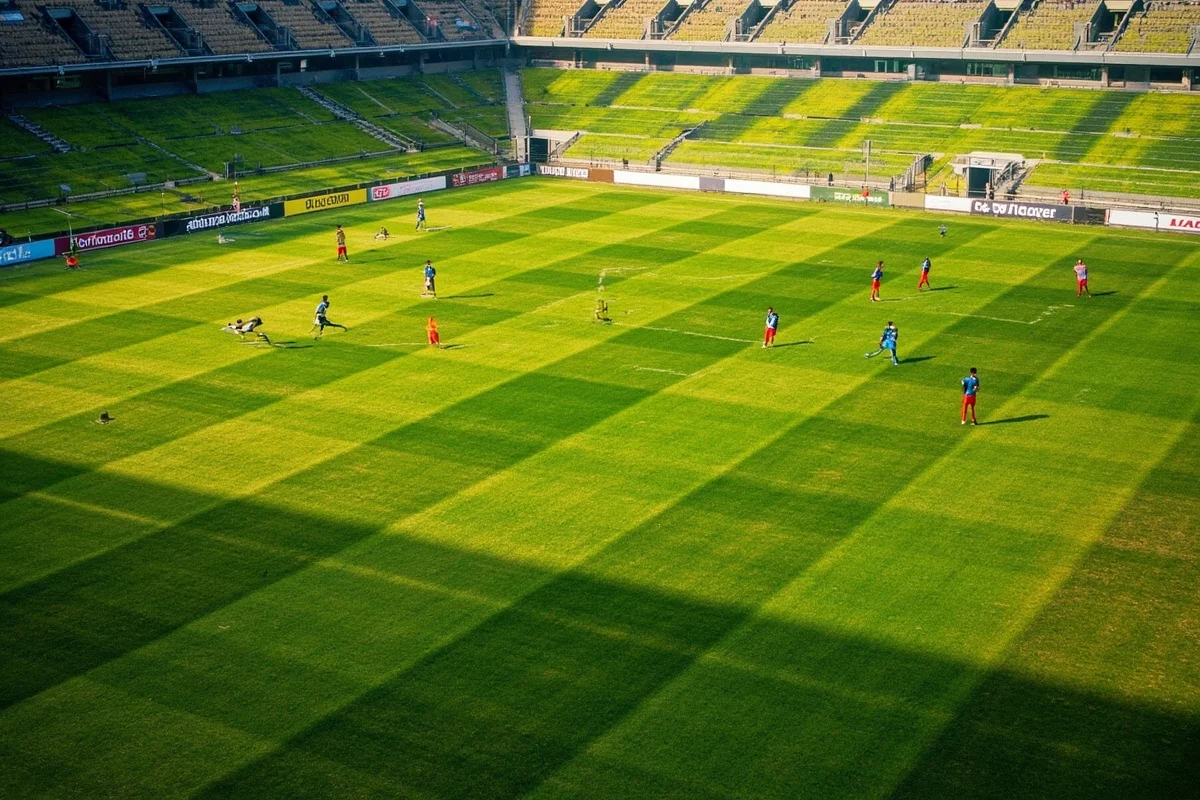
La Liga runs on a tactical language built from layered structure and spatial control. Most sides start in a 4-3-3 or 4-2-3-1 and reshape as the ball moves. Full-backs push high while a holding midfielder drops between the centre-backs to form a temporary back three, wide forwards tuck inside to occupy the half-spaces, and the centre-forward stretches the opposing centre-backs. The half-spaces, the corridors between the central lane and the touchline, carry most of the creative weight because they offer passing lanes toward goal without crowding the box.
Out of possession, teams press in coordinated waves on clear cues: a pass back to a centre-back, a sideways touch under pressure, a receiver turning his back to goal. Behind that press, many sides hold a high line and trust the goalkeeper to sweep. When the ball turns over, the first five seconds decide whether the move ends in a shot, a territorial gain or a reset. Heading into 2026-27, those habits still define the league, with each manager setting the press height and line height to fit his players.
Formations and Structural Roles
The 4-3-3 remains the default for possession-oriented sides. A single pivot sits ahead of the centre-backs, two interiors rotate into the half-spaces, and the front three combine a centre-forward with two wide attackers. Full-backs supply the width, so the wide forwards can drift inside onto their stronger foot. In possession this often becomes a 3-2-5 that drags opposing centre-backs out of position. The 4-2-3-1 adds a second holding midfielder for sides that want more control after losing the ball, and frees the No. 10 to work between the lines. The 4-4-2 survives in mid-table and lower-half teams that want direct combinations and transitions more than long passing sequences, and a smaller group uses a 3-5-2 or 3-4-3 with wing-backs.
Each role shapes the others. The pivot controls tempo, drops between the centre-backs to invite pressure, then bypasses it with vertical passes into the interiors. The interiors choose between carrying, recycling and arriving late in the box. Full-backs coordinate with their winger on agreed cues: overlap when the winger pins the opposing full-back, hold the width for a switch when the winger cuts inside. The centre-forward either drops to link play or pins the centre-backs. Out of possession the same sides usually defend in a 4-1-4-1 or 4-4-2, and most want at least one extra body in the central third before committing numbers forward.
The High Line and the Offside Trap
Many La Liga sides push the back four to around 35 to 40 metres from their own goal, which shrinks the distance between centre-backs and forwards to roughly 25 metres. Every first pass from the opponent then lands in a contested zone. The centre-backs and the screening midfielder step up together the moment the opposition plays forward, catching runners whose timing is a fraction late.
The risk sits behind the line. One miscommunication between a centre-back and a full-back, or a ball played early into a runner's path, turns the high line into a runway toward goal. That is why the system needs a sweeper-keeper who reads the line and comes out to clear balls over the top, centre-backs comfortable turning, and a holding midfielder who spots the runner before the pass. Coaches accept the exposure because the alternative against technical opponents is worse: a deep block hands over the half-spaces and lets creative midfielders dictate with their heads up. The high line also feeds the counter-press, since a turnover within 30 metres of the opponent's goal finds the team already in position to swarm.
Pressing Triggers and Trap Lines
La Liga sides rely on three or four reliable cues, and they have historically been more selective than Bundesliga or Premier League teams about when to jump:
- a pass back to a centre-back or the goalkeeper
- a square ball between the two centre-backs
- a reception with the back to goal, especially from a striker or No. 10 dropping deep
- a full-back receiving on the touchline with his body turned toward his own goal
The centre-forward is usually the activator, watching the centre-backs' body shape and receiving foot. When the trigger fires, he steps onto the receiver, the near winger tucks in to cover the central lane, and the opposite forward blocks the switch. Central midfielders press only when the ball reaches a player whose body is sideways or backward. The structure behind the jump, one presser, one cover and one player balancing behind, recurs across most pressing schemes in the league.
Trap lines decide which passes are allowed and which are attacked. A side might concede the wide pass and the pass back to the centre-back, then pounce when the ball travels horizontally into the full-back, using the touchline as an extra defender. Others flood the half-space with cover shadows so the central midfielder cannot receive between the lines. Trap height depends on personnel: teams with quick centre-backs press in the final third, while slower back lines drop the trap toward halfway to keep the distances short.
When the Press Is Bypassed
Spanish sides split into two answers when the first press is beaten. The Atlético-influenced template retreats into a compact 4-4-2 mid-block and resets about ten yards deeper. The Barcelona-derived model counter-presses for five or six seconds, with the nearest two or three players swarming the ball before the opponent can turn upfield. Both carry exposure. The mid-block invites sustained possession near the box, and the counter-press leaves the back four open to vertical combinations if the second wave fails.
The mid-block is often used as a complement to a high press instead of a permanent plan. The back four sits 10 to 15 yards inside its own half, the central pair hovers a few yards in front, and the shape stays no wider than the penalty area. It suits teams that lack the athletes to press for 90 minutes or face opponents comfortable under pressure. A late trigger is its weak point: one pass can then bypass three lines and leave the back four in a 3v3.
Building From the Back
Possessions almost always start from the goalkeeper, who acts as a third centre-back and often stands on the edge of the box, level with his defenders. The centre-backs split toward the touchlines, the pivot drops between them, and the result is a three-versus-two against a front pair, or a 4v2 when the double pivot drops against a single striker. Full-backs read the press live: against a two-man front they push high and wide, against a man-oriented first line they tuck into the half-spaces as extra short options.
Breaking the first line depends on coordinated movement. The far-side midfielder drifts to drag a marker away, opening a lane into the pivot or a dropping attacker. Wingers check toward the ball to form triangles with the full-back and a midfielder. Against a high, man-oriented press, short passes to the pivot work; against a settled mid-block, driven balls or throw-outs to a winger on the half-turn can skip three or four opponents. When the pressing side commits, a diagonal switch to the free full-back or a long ball into the channel bypasses it at the cost of territory.
Positional Play, Half-Spaces and Rotations
Positional play in La Liga treats the pitch as a grid of zones. Each player holds a corridor, and the side nearest the ball always has a passing option, usually in a half-space. A player there receives facing forward on the half-turn, which a touchline winger cannot do, and pins the opposing full-back: he cannot step out to press without exposing the corridor behind, and cannot drop without conceding the entry pass. The central lane is often left fairly empty and used as a channel for vertical passes.
Rotations turn that occupation into progress. The full-back steps inside while the winger goes wide, a central midfielder drops between the split centre-backs, and an attacking midfielder moves into the half-space a forward has vacated. Each exchange forces a defender to follow a runner and vacate a zone, or hold and concede territory. Wide overloads work the same way, with three or four players on one flank pulling the cover shadows of the nearest centre-back and screening midfielder out of the half-space. The same grid guides the press: when the ball enters a half-space, two or three players close the nearby passing angles while the block shuts the centre.
Breaking a Deep Block
Against sides that sit behind the ball, patience is routine, with chains of eight to twelve passes before a chance-creating action. The first target is the space between the centre-backs and the midfield line. A midfielder checks toward the ball, draws the opposing pivot, and plays one touch to a runner attacking the space behind, usually a forward curving into the blind side of the nearest centre-back.
When two tight banks close the middle, the wide areas become the entry point. A winger cuts inside onto his stronger foot, the full-back overlaps, and the defence faces a two-versus-one on the flank. A false nine offers another route: the centre-forward drops level with the midfield, the centre-backs hesitate, and a second-line runner attacks the space they leave. These moves usually end in a cutback from the byline instead of a cross from deep.
Transitions, Rest Defence and Game State
Rest defence, the shape left behind while the team attacks, hinges on the centre-backs and the deepest midfielder. A side that loses the ball at the edge of the final third still has six or seven players behind it within 15 metres of each other, and the near winger often drops early so the shape becomes a 4-4-2 shell within seconds. On regains, the first pass is usually to feet and the second behind the defence, often a diagonal from a deep midfielder to a runner peeling off the last centre-back, followed by a third-man combination. Wide players often check their runs and act as connectors first, so the counter does not stall before halfway.
Game state reshapes everything. A team protecting a one-goal lead drops its winger into midfield and forms a 4-5-1. A side chasing an equaliser pushes both full-backs on and commits an extra player to the box. Managers adjust at half-time, switching from a man-oriented press to a zonal block or raising the line by ten metres, and substitutions cluster between the 60th and 75th minutes, with fresh legs aimed at tired full-backs.