French football has established itself as the preeminent talent development engine in global sports by aligning institutional infrastructure with an economic framework that mandates early exposure. At the base of this ecosystem sits a dense concentration of state-certified academies and elite regional scouting networks that identify and refine prospects from a young age, particularly across fertile metropolitan talent pools. Because domestic clubs operate with structural revenue deficits relative to wealthier foreign competitors, they rely heavily on player trading models to maintain long-term financial equilibrium. This economic reality makes youth development an operational imperative. Teenagers and early-career prospects are provided clear, non-negotiable pathways to senior first-team minutes, accumulating competitive experience far earlier than their peers across other major European divisions.
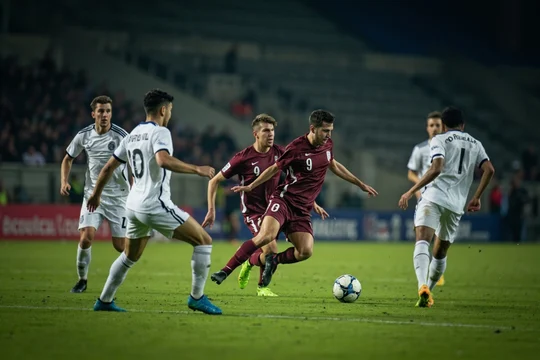
The division's on-pitch environment functions as an unforgiving crucible that accelerates this maturation process. Matches are defined by intense athletic duels, rapid transitional phases, and rigorous tactical structures that demand immediate physical resilience and exceptional decision-making under pressure. Young players adapt to compact defensive blocks, absorb contact, and execute tactical assignments at senior tempo. This balance between high-level athletic confrontation and complex game management ensures that prospects leave the development phase with transferable skill sets suited for any tactical system.
Elite Academy Infrastructure and Scouting Concentration
The foundation of French football's developmental success lies in an institutionalized academy model that integrates state-supported regional training centers with club-run development systems. Regulated by stringent national standards, clubs invest in modern training complexes designed to balance tactical comprehension, athletic profiling, and technical refinement. Young prospects are immersed in curricula that prioritize cognitive processing speed, spatial awareness, and position-specific versatility over short-term match results. This pedagogical consistency across youth age groups creates a standardized development curve, ensuring that teenagers are structurally prepared to adapt to the physical intensity and tactical demands of senior professional competition earlier than peers in most rival leagues.
Complementing this infrastructure is a dense domestic scouting network, concentrated around major metropolitan peripheries that serve as epicenters for grassroots football. Scouts operate within interconnected regional ecosystems, identifying raw talent honed in competitive urban settings and transitioning those players into structured training environments. Domestic regulations incentivized clubs to focus on home-grown assets, as foreign imports were cost-prohibitive, and the identification apparatus has evolved to spot athletic and technical profiles with precision. This synergy between geographical talent density and systematic, early-stage talent identification establishes a pipeline that fuels top-flight squads.
Clear Pathways to First-Team Minutes
A fundamental driver of French football's developmental success is the economic and operational necessity that compels clubs to integrate academy prospects directly into senior competition. Operating beneath the financial ceilings of peer leagues in England or Spain, domestic clubs construct their sporting models around high-yield talent cultivation and subsequent player sales. Consequently, promising teenagers encounter fewer veteran roadblocks in their path to the pitch. Emerging players frequently step into starting lineups out of institutional necessity, skipping prolonged reserve-team cycles and repetitive lower-league loans. This systemic willingness to absorb the inevitable inconsistencies of youth affords prospects an early, rigorous immersion into the tactical pacing and physical demands of elite
Intense Tactical Demands Accelerating Physical Readiness
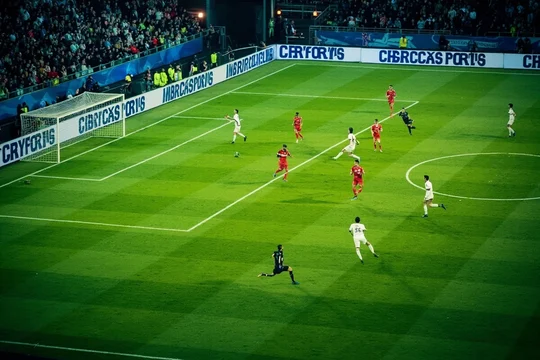
The structural nature of French domestic football creates an environment that compresses the traditional timeline for athletic maturity. The division is defined by rapid transition phases, aggressive mid-blocks, and an unusually high volume of ground and aerial duels. Young prospects entering the senior game are immediately confronted with tactical frameworks that weaponize verticality and transitional counters, demanding that outfield players sustain repetitive, high-intensity sprinting over ninety minutes. This reality strips away the luxury of purely technical insulation; emerging talents must quickly adapt their cardiovascular output, spatial recovery speed, and core physical resilience to navigate the baseline demands of their positional responsibilities.
The league requires developing players to integrate physical conditioning into tactical execution under duress, applying their skills in constantly contested spaces. Central defenders learn to defend expansive open territory behind their defensive lines against rapid wide forwards, while wingers and central midfielders execute demanding counter-pressing triggers and long recovery runs. By repeatedly facing these physical confrontations against seasoned opponents, young players master body positioning, deceleration, and contact absorption in live-game scenarios. When these talents move to other elite continental leagues, their conditioning shortens the adjustment period needed to compete.
Financial Necessity Driving Player Trading Models
The structural reality of domestic broadcasting revenues and strict financial oversight necessitates a distinct economic strategy across French football. Most French clubs operate where standard operational costs regularly outpace recurring commercial and matchday income, without the massive global television agreements or widespread external subsidization that sustain other leagues. Independent regulatory bodies enforce stringent budgetary compliance, penalizing unchecked deficits and compelling ownership groups to maintain balanced books. Consequently, the transfer market functions as a foundational pillar of ongoing business operations. Net player trading surpluses represent the primary method for closing recurring operational deficits, requiring executives to design organizational structures around continuous talent turnover.
To operationalize this model successfully, clubs must systematically generate capital gains through calculated pitch-level integration. This economic imperative directly dictates squad construction, youth promotion, and managerial mandates. Sporting directors and coaching staffs prioritize providing valuable first-team minutes to academy graduates and undervalued recruitment targets, thereby accelerating development and establishing clear data profiles in top-tier competition. Demonstrating senior-level proficiency at an early age substantially enhances an individual's market value, attracting capital-rich foreign buyers seeking pre-vetted upside. The resulting capital injections are subsequently divided between fulfilling domestic financial solvency requirements, funding academy infrastructure, and acquiring the next tier of developmental talent, sustaining an ongoing cycle of talent monetization.
Conclusion
Ligue 1’s status as the continent's preeminent development pipeline is the result of a deliberate ecosystem where elite talent identification directly aligns with sporting opportunity. Concentrated regional scouting networks and structurally refined academies establish a strong technical baseline, which is quickly reinforced by regular first-team minutes. Exposed early to the league’s distinct blend of rapid transitional play, defensive discipline, and high athletic requirements, young players experience an accelerated tactical and physical adaptation that translates seamlessly to any elite league.
Underpinning this continuous production line is an operational model driven by economic reality. French clubs have transformed the necessity of balanced balance sheets into a strategic advantage, relying on systematic player trading to fund operations and sustain infrastructure. As the broader market places an ever-higher premium on verified senior-level performance and physical readiness, the division functions as the premier finishing school in modern professional football.