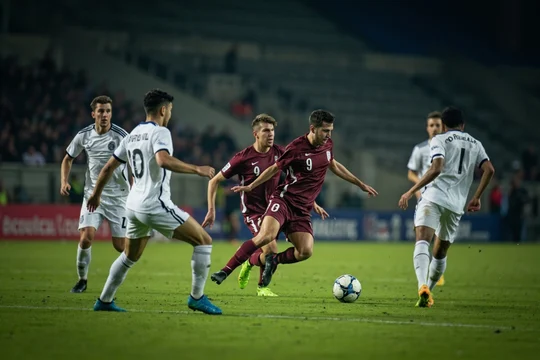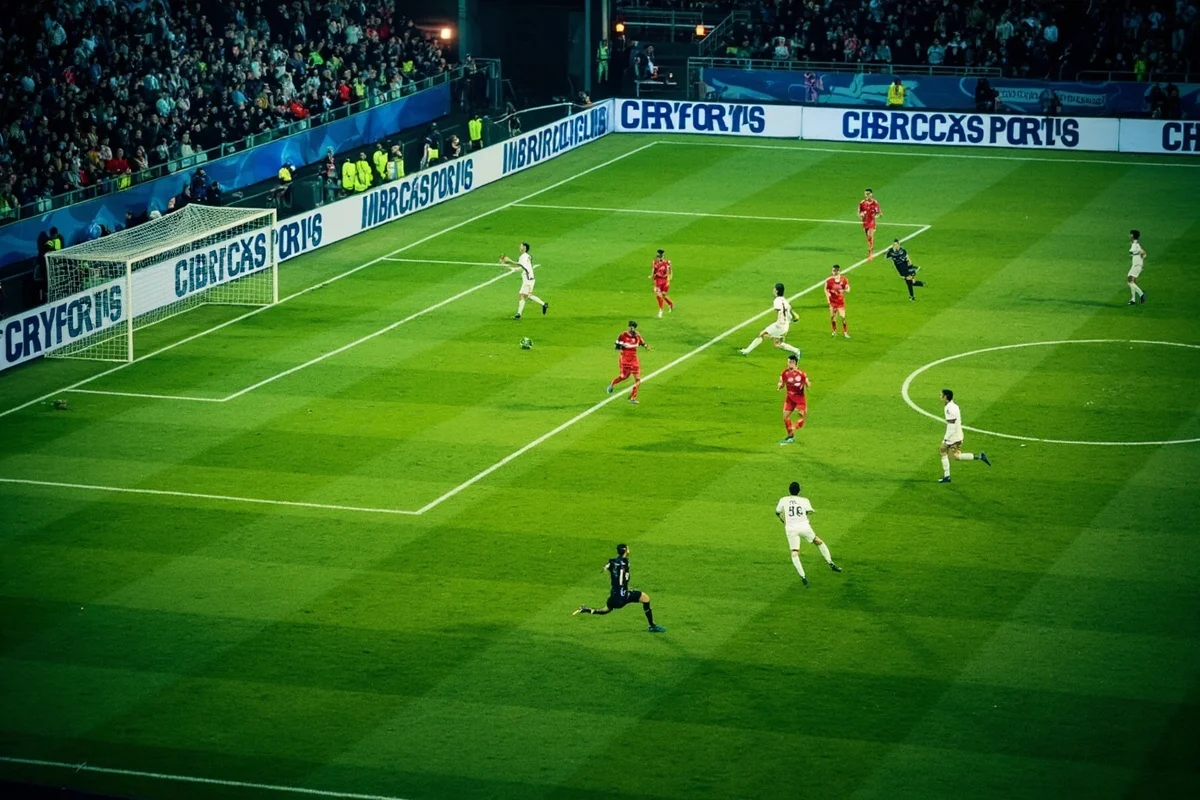
Heading into 2026-27, Ligue 1 runs on a small set of structural templates that coaches bend to fit their squads. The 4-3-3 and 4-2-3-1 account for most starting line-ups, the 4-4-2 survives among direct sides with two forwards, and a back three returns whenever a coach needs an extra body in central midfield. What separates teams is less the shape on the team sheet than the cues they press on, the way they build past the first line, and how quickly they reorganise in the seconds after losing the ball.
The early weeks of the season have sharpened two trends. Full-backs who step inside during build-up have become close to standard among the sides that want the ball, and high presses are asking more of back lines than many of them can give for ninety minutes.
Base Formations Across Ligue 1
The 4-3-3 is the default for clubs that want to control possession and build from the back. A single deep-lying pivot shields the centre-backs while two eights work either side of him. Wide forwards tuck into the half-spaces, which forces the opposing full-backs into one-on-one duels and opens the touchline for the same-side full-back to overlap. In possession the shape often tilts into a 3-2-5, with the pivot dropping between the centre-backs, one eight pushing into the half-space and the other tucking narrower to open a lane into the centre-forward.
The centre-forward either pins the deepest centre-back as a reference point or plays as a false nine, dropping between the lines to drag a centre-back out.
The 4-2-3-1 follows similar logic with a second holder in front of the back four. Coaches pick it when they want a safer base and a number 10 working between the lines behind a lone striker, and it often becomes a 3-2-5 in possession when the full-backs advance and the double pivot splits. The 4-4-2 remains a working option for direct teams. Two strikers press the centre-backs, the wide midfielders drop into a compact block, and the central pair screens passes into the number 10 zone.
Back-three systems appear less often but have clear logic. A 3-4-2-1 or 3-4-1-2 gives numerical superiority in central midfield, where most second balls are contested, and sends the wing-backs high to supply width. Without the ball the same teams defend in a 5-4-1 mid-block. The shape suits clubs with athletic wide defenders and a centre-back comfortable stepping into midfield, and it suits smaller squads too, because one wing-back does the work of a full-back and a winger.
Across all these shapes, coaches keep no more than 15 to 20 metres between the defensive and midfield lines. That compresses the central corridor and pushes play into the wide channels, where full-backs and wide midfielders decide a lot of matches.
Inverted Full-Backs in Build-Up
The clearest shift this season is the full-back who steps inside during build-up instead of holding the touchline. He joins the pivot as an auxiliary central midfielder, or drops between the centre-backs to form a back three. The centre-backs split wider, passing lanes through the middle get shorter, and the attacking midfielders are free to work between the lines while a winger or an eight holds the width.
Opponents have adapted quickly. They press the wide channel the full-back has vacated and force him to choose between a risky lateral switch and a backward pass that gives up the ground the movement was meant to win. Sharper opponents also target the moment the full-back inverts before the winger has tracked his runner, or the moment the pivot steps out and leaves a lane between the centre-backs.
Pressing Triggers and Defensive Lines
Ligue 1 defences engage on specific cues, and possession share tells you little about them. The most reliable trigger is a pass back to a centre-back whose body already faces his own goal, because his first touch is predictable and his time to scan is short. Others recur across the league:
- a receiver in the near half-space with his back to play
- a full-back receiving near the touchline with his body open toward the centre
- a slow sideways pass along the defensive line
- a heavy first touch, or a goalkeeper rolling the ball short into traffic
- throw-ins near the corner flag, where the recovery distance is short if the press is broken
Once the cue appears, the press works as a chain. The striker curves his run to block the pass into the pivot and force play to one side. The near winger jumps the full-back, the near eight closes the lane to the pivot, and the far winger tucks in to cover the switch. Cover shadows do much of the work, with each presser angling his body to block a central lane while he closes the ball. Triggers misfire when one player jumps before cover arrives. The sides that concede the clearest chances tend to press in ones and twos, which leaves a single line-breaking pass open.
Line height varies with risk appetite. A high block sits 5 to 10 metres past halfway and needs athletic centre-backs and a goalkeeper willing to sweep. More common is a mid-block where the first press engages roughly 35 to 40 metres from goal, with slower and narrower triggers such as a forward receiving with his back to goal or an isolated full-back.
High presses have stretched back lines in the opening weeks. Teams pressing in a 4-2-4 or 3-4-3 above halfway leave two or three defenders to cover the full width, because the full-back has inverted or stepped up to join the press. Centre-backs get pulled far apart in wide recovery sprints, and the gap between the press and the back line becomes a corridor for one vertical pass. Fitness compounds the problem, since an intensity a squad can hold for an hour early in the season rarely lasts the full match, and late errors tend to follow a press that breaks down. Many sides now pair the aggressive front line with a lower second line and ask full-backs to delay instead of diving in.
Build-Up Patterns From the Back
Build-up usually starts with the centre-backs splitting to the width of the penalty area and the goalkeeper stepping between them as an extra passer. The deepest midfielder drops to form a temporary back three, giving a 3v2 against a front two. Against a front three, a full-back tucks inside to add a fourth player at the back.
Progression leans on third-man combinations more than slow circulation. A typical sequence runs from centre-back to a dropping eight, then a one-touch lay-off to an advancing full-back, then a pass into the half-space where the winger can attack a retreating defender. Against a high press, centre-backs look for a dropping forward or false nine who can turn. Against a mid-block, circulation goes wide and the pivot works as a fulcrum for switches.
The risk lives in the same geometry that creates the advantage. A high line and a goalkeeper acting as a third centre-back leave space behind for direct balls, and heavy reliance on the keeper's feet gives an aggressive pressing pair a chance to intercept the first pass.
Midfield Duels Inside the Mid-Block
When the press is bypassed, most sides drop into a 4-4-2 or 4-1-4-1 with the two banks close together. Three duels then decide whether the block holds. The first is the striker against the centre-backs, where a clean win and a pass into the holding midfielder lets the defending side break out. The second sits between the lines, where an opposing eight or ten receives between the pivot and the centre-back, and an early jump by the pivot is how French teams create turnovers in dangerous zones. The third is the pull between wide and central, as a winger drifts inside to drag the holding midfielder out of his lane. If he follows, a centre-back must step out to cover. If he holds, the winger turns.
Full-backs carry three recurring choices in this phase. They overlap to stretch the line, tuck in to form a back three, or hold the touchline to pin the opposing winger. Defensively, the near centre-back covers when the full-back steps out, and the most compact back fours stay within ten metres of each other.
Final-Third Runs and Half-Spaces
Striker movement follows two patterns. The diagonal drop between the lines pulls a centre-back out and tilts the defensive shape, while the vertical burst into the outside channel attacks the space behind a full-back who has pushed high. When the striker drops, a midfielder or second forward times a run beyond the last defender.
Half-space rotations produce the most dangerous sequences. A winger drifts inside, the full-back overlaps, the attacking midfielder drops to collect and the striker peels off the last defender's shoulder. Most sides work the ball to the byline and cut it back toward the penalty spot, where a central midfielder or far-side runner arrives late, instead of swinging in a first-time cross.
Transitions and Counter-Pressing
Counter-pressing in Ligue 1 happens in a window of roughly four to six seconds, and French academies teach a four-second rule drawn from the German pressing model. The player who lost the ball presses the receiver, two teammates form a triangle to seal the escape routes, and a holding midfielder steps into the pocket where the opposing number 10 would receive. Sides such as Strasbourg, Brest and Rennes build their systems around this swarm. It demands repeat sprints and full commitment to duels, so most clubs reserve it for turnovers in the opponent's half and default to a mid-block deeper down.
When the press wins the ball, the attack resolves through a vertical ball into the channel, a switch to the weak-side winger, or a lay-off to an underlapping full-back. Counter-runs tend to come from an eight bursting from deep while the centre-backs track a decoy. When the press breaks, the nearest two attackers delay the carrier, the midfield retreats on diagonal lines into two banks, and the goalkeeper starts ten to fifteen metres off his line to sweep balls over the top.
Set Pieces, Aerial Duels and Game Management
Set pieces carry unusual weight in Ligue 1, and dedicated set-piece coaches have become standard at French clubs. Defensively, most sides use zonal marking across the six-yard box, often in a hybrid with two markers on the tallest opponents. Attacking routines lean on near-post flick-ons, back-post overloads into the space left by a defender chasing a decoy, and short corners that drag the first defender out.
Aerial duels shape open play too. Many sides use a tall target striker to win first contact and lay off to a forward arriving from deeper, and the team that wins the second ball usually takes the next shot. Defensively, full-backs hold the touchline channel, centre-backs win first contacts through the middle, and defensive midfielders screen the knockdown zone in front of the box. When a side loses a header in its own half, it counter-presses the receiver of the knockdown at once.
Leading sides shift into a 4-1-4-1 or 5-3-2, drop the press, slow restarts and take tactical fouls in safe areas. A holding midfielder or third centre-back often replaces an attacker around the hour when a one-goal lead needs protecting, while trailing teams stack wingers and a second striker, push full-backs higher and open central corridors for balls over the top.
Reading a Ligue 1 Match
Two snapshots reveal most of a team's plan. The first three seconds after a turnover show the press height and whether the side counter-presses or retreats. The positions of the central midfielders when the opponent plays through the lines show the defensive shape and the full-back's role. The striker angling his run toward the centre-back's stronger foot marks the start of the press, and a full-back tucking inside means a midfield lane is about to open.