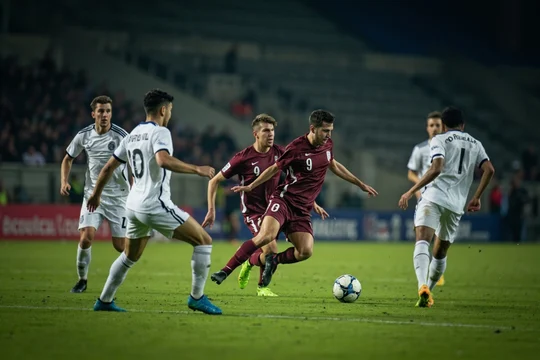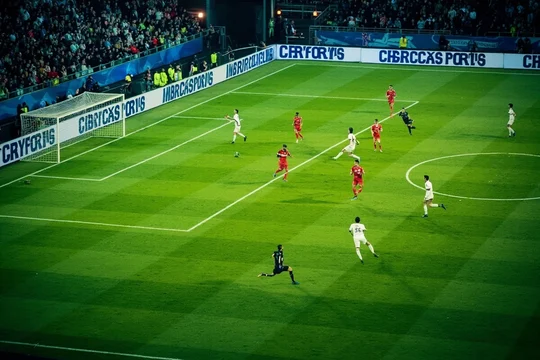
France has established itself as the preeminent global pipeline for elite defensive talent, underpinned by a highly concentrated urban scouting ecosystem. Dense metropolitan suburbs, particularly around major industrial hubs, serve as fertile grounds where regional technical centers and professional club networks systematically identify prospects at an early age. Within these localized talent clusters, the developmental curriculum prioritizes acute spatial awareness. Young defenders are conditioned in tight, high-pressure environments where rapid perceptual scanning, positional geometry, and predictive anticipation are cultivated long before structural tactical frameworks are introduced.
As these prospects advance through professional academies, training focuses on developing dual-threat ball-playing capabilities that meet the tactical demands of modern possession-based football. French training models integrate progressive passing, press resistance, and line-breaking ball carries directly into the defensive profile. Academies combine natural athletic foundations with tactical intelligence while reinforcing defensive fundamentals. The result is a profile of defender capable of executing complex zonal coverages, managing large expanses of space in high defensive lines, and initiating attacking sequences under pressure.
The Concentrated Urban Scouting Ecosystem
France’s urban peripheries, particularly surrounding its major metropolitan centers, host a dense network of amateur clubs that serves as the primary filter for defensive talent. High population density and accessible public pitches create an environment where young players engage in continuous, high-repetition football characterized by tight spaces and physical duels. Professional academies maintain expansive, localized scouting networks embedded directly within these grassroots setups. Scouts routinely monitor regional youth tournaments, evaluating prospects for cognitive composure under pressure alongside recovery speed and physical traits. Because these urban environments demand rapid spatial orientation and anticipation against technically proficient attackers, defensive prospects develop problem-solving mechanisms before entering formal academy infrastructure.
The efficiency of this scouting ecosystem is reinforced by intense inter-club competition, which prevents domestic monopolies and ensures thorough talent coverage. Multiple professional sides monitor the same amateur circuits, creating a competitive vetting process that accelerates the identification of versatile defensive profiles. Talent evaluators prioritize players capable of operating in expansive spaces, anticipating transitional threats, and defending both forward into midfield and backward toward their own goal. By observing candidates in unstructured competitive settings, recruiters select defenders who demonstrate positional awareness and physical resilience. This pipeline ensures that when prospects transition to elite residential centers, they have already shown the capacity to withstand the psychological and tactical demands of modern, high-line defensive structures.
Early Emphasis on Spatial Awareness
French training methodologies prioritize cognitive development long before physical traits are fully maximized. At the foundation phases, youth prospects are routinely immersed in small-sided games and positional exercises designed to heavily constrain both time and space. Coaches require players to read the geometry of the pitch continuously. Training sessions emphasize body shape orientation, peripheral vision, and high scanning frequencies, conditioning young defenders to monitor passing lanes and the blind-side movements of attackers simultaneously. By neutralizing territory preemptively, developing players cultivate an instinctive understanding of how to manage defensive depth.
As prospects transition toward senior-level tactical frameworks, this localized awareness scales into collective spatial management. Academies drill backlines to regulate the vertical and horizontal compactness of the entire team, instilling an acute sensitivity to the distances maintained between individual defenders and the midfield unit. Trainees learn to interpret specific visual triggers, such as an unpressured opponent shaping to pass, which dictate whether to compress the playing area or retreat to protect the space behind. This cognitive foundation equips modern defenders to thrive within aggressive high-line structures, where calculating the vulnerability of open grass is as critical to preventing goals as winning physical duels.
Developing Dual-Threat Ball-Playing Capabilities
French youth development systems train defenders to act as primary initiators in the first phase of build-up play alongside their defensive responsibilities. The training methodology consistently integrates technical drills that demand equal competency in line-breaking distribution and progressive ball-carrying. Instead of encouraging immediate clearances under pressure, academies use small-sided possession games on restricted pitches that force young central defenders to manipulate angles, operate in tight corridors, and play through the center of the pitch. Furthermore, it is standard practice to rotate promising defensive prospects through central midfield roles during their early developmental cycles, instilling a refined first touch, acute spatial awareness, and the ability to receive possession on the half-turn against aggressive opposition presses.
This pedagogical foundation produces central defenders capable of dismantling opposing defensive structures through multiple strategic avenues. When facing an opponent deployed in a compact mid-block designed to congest central passing lanes, these defenders possess the composure and dynamic mobility to step forward and carry the ball directly into open space. This action destabilizes the opponent's defensive lines by forcing a pressing midfielder to commit, which opens a passing lane to an unmarked teammate in the half-spaces or between the lines. Conversely, when confronted by high-intensity pressing units, their ambipedal passing range allows for rapid diagonal switches to exploit the underloaded side of the pitch. By treating technical execution with the ball as an essential defensive attribute, these academies generate players who meet the fluid structural demands of modern possession-based football.
Harmonizing Athletic Foundations With Tactical IQ
The French developmental framework treats physical profiling as a vehicle for spatial control and tactical anticipation. Training centers embed physical requirements such as recovery acceleration, deceleration capacity, and aerial dominance directly into contextual match scenarios rather than generic conditioning regimes. From the earliest stages of specialized development, prospective centre-backs and full-backs take part in condensed, high-intensity rondos and directional possession games that demand rapid perceptual processing. By constraining space and time, the curriculum prevents young defenders from relying on raw athleticism to compensate for defensive errors. They learn to refine their body orientation, adjust drop angles, and manage their center of gravity to funnel play away from critical central zones, applying physical gifts toward clear strategic intentions.
This cognitive emphasis extends to the requirement for defenders to initiate attacking possession while maintaining structural balance. Academy curricula focus on transitional phases, training defenders to identify triggers for stepping out to intercept or dropping to protect the space behind a high defensive line. Tactical schooling prioritizes proactive positioning, requiring defenders to anticipate passing lanes and assess numerical parity before pressing forward or executing covering runs. In possession, these players learn to manipulate opponent pressing blocks through deceptive body language and line-breaking passes, alternating between passive retention and vertical progression. Systematically pairing physical resilience with an advanced comprehension of spatial geometry and phase management produces modern defenders capable of adapting to fluid tactical systems.
Conclusion
The continuous emergence of world-class modern defenders from French academies reflects an integrated development model that links grassroots infrastructure with elite professional preparation. By drawing from dense urban scouting networks and prioritizing early spatial awareness, training centers develop an acute understanding of positioning, coverage, and game reading. Emerging center-backs and full-backs use proactive anticipation to manage space and counter opposition transitions.
Technical versatility is equally central, with ball-carrying and progressive distribution cultivated as core competencies. Combining athletic development with tactical education allows the academy system to bridge the divide between traditional ball-winning stoppers and modern playmakers.