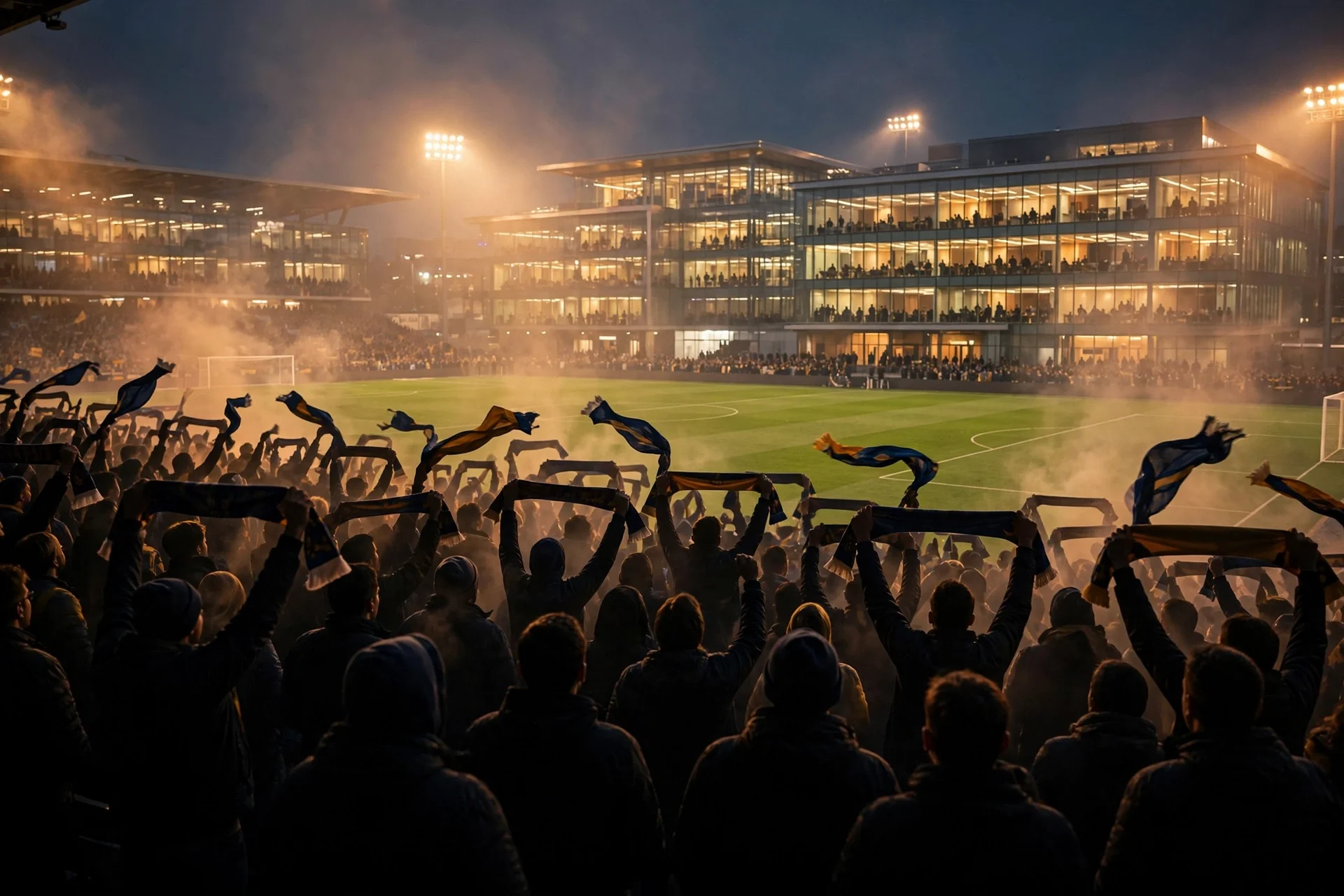
The governance of German professional football is defined by the 50+1 rule, a structural regulation stipulating that a club’s non-profit parent association and its registered members must retain a majority of the voting rights within its commercial enterprise. By legally barring external private investors, sovereign entities, and corporate consortia from acquiring controlling equity, this framework preserves a model of democratic club ownership that is rare in the upper echelons of modern sport. The primary consequence of this member-led oversight is the deliberate safeguarding of traditional fan culture. Because executives and administrators remain accountable to the supporters who comprise the electorate, clubs consistently prioritize matchday affordability, accessible ticket pricing, the preservation of safe standing terraces, and community-centric values over aggressive institutional monetization.
Yet this emphasis on member democracy generates an enduring strategic tension between long-term financial prudence and continental competitiveness. While the regulation successfully shields organizations from existential debt and speculative mismanagement, it inherently restricts the inflow of external capital that fuels rival clubs in less regulated European leagues, potentially capping the domestic league’s purchasing power on the international transfer market. This structural friction is intensified by modern commercial pressures and institutional exemptions, such as historical dispensations granted to long-term corporate patrons and contemporary workarounds that challenge the spirit of the statute.
Mechanics of Democratic Club Ownership
The structural foundation of democratic ownership within German football rests on the formal separation between commercial capital and administrative control. Historically organized as non-profit registered associations, clubs were permitted under structural reforms to spin off their professional football departments into corporate entities, such as joint-stock or limited liability companies, to attract outside commercial investment. However, the governing framework mandates that the parent sports association must retain at least 50 percent of the voting rights, plus one additional vote, within that commercial entity. This legal mechanism strictly decouples capital investment from executive authority; an outside investor may acquire substantial economic equity, but the registered association preserves the statutory majority required to approve strategic resolutions, appoint management, and direct sporting policy.
This legal architecture gives grassroots members authority by placing the ultimate governance apparatus in the hands of registered supporters who hold active status within the parent club. Through annual general assemblies, members exercise their franchise to elect leadership figures, including presidents and supervisory boards that monitor the professional operations. Consequently, club directors remain structurally accountable to a voting body motivated by historical continuity, matchday affordability, and regional identity rather than maximizing short-term dividend yields. This distribution of power creates an institutional check against unilateral corporate maneuvers, requiring commercial proposals regarding stadium naming rights, ticket pricing structures, and core brand assets to align with broad stakeholder consensus.
Protecting Fan Culture and Matchday Affordability
The 50+1 rule operates as a structural barrier against the rapid inflation of attendance costs that frequently accompanies unchecked private ownership in elite sport. Because the majority of voting rights remain anchored with the registered club members, commercial executives cannot unilaterally dictate matchday economics without facing direct democratic accountability. This institutional structure alters the strategic priorities of club management, obliging decision-makers to balance revenue generation with community accessibility rather than pursuing the extraction of short-term profit. Consequently, general admission ticket pricing frameworks remain deliberately accessible to a broad demographic, contrasting sharply with models that prioritize dynamic pricing mechanisms and the conversion of traditional ground allocations into high-margin corporate hospitality suites.
Beyond ticket pricing, member oversight protects the fundamental physical and cultural fixtures of the stadium experience, notably the preservation of extensive standing terraces and communal customs. Supporters use their institutional influence to resist commercial initiatives perceived as detrimental to the matchday dynamic, such as fragmented scheduling designed purely for international broadcasting schedules or excessive sponsorship impositions on historic club identities. This governance framework ensures that attending matches remains a viable habit across diverse socio-economic backgrounds, producing intense vocal atmospheres and deep generational loyalty. While deliberately curtailing potential commercial windfalls that detached owners might pursue, the preservation of affordable, member-driven fan culture maintains the domestic vitality that underpins the competition's enduring international appeal.
Financial Prudence Versus Continental Competitiveness
The core philosophy of the 50+1 framework roots German football in organic growth, requiring clubs to operate strictly within the boundaries of their self-generated revenues. Because club members retain a majority of voting rights, the regulation blocks the entry of private equity funds, sovereign wealth entities, and individual magnates seeking to cover operational deficits through direct capital injections. This model enforces structural discipline across balance sheets, keeping low debt burdens, liquidity, and controlled operating costs. While peer institutions in other major European leagues frequently accumulate substantial liabilities to underwrite squad expansion, German sides consistently preserve long-term solvency, remaining insulated from the crises that can follow sudden changes in private ownership.
This institutional prudence introduces friction when clubs enter continental competitions, where purchasing power heavily dictates sustained sporting success. Without external patrons to subsidize escalating transfer fees and wage inflation, German organizations face strict ceilings on their player budgets compared to competitors backed by sovereign states or private consortia. As a consequence, domestic clubs must navigate the talent-drain dynamic, with their most decorated talent acquired by wealthier foreign rivals. Although superior scouting networks, analytical recruitment, and youth academy pipelines can bridge tactical divides, the aggregate financial deficit still challenges the ability of German sides to maintain the world-class squad depth required to consistently secure continental trophies.
Commercial Pressures and Institutional Exemptions
The modern European football landscape operates within an intensely commercialized environment, placing structural pressure on the traditional governance model of the Bundesliga. While the 50+1 framework shields clubs from speculative takeovers and debt-fueled insolvency, it inherently constrains access to private equity and foreign direct investment. In continental competitions, German clubs must routinely contest honors against foreign entities backed by sovereign wealth funds, multinational conglomerates, and individual multi-club ownership networks that operate without domestic equity restrictions. Consequently, club executives frequently debate whether the ownership restrictions limit the league's overall finances and international broadcasting value. Unable to offer controlling voting rights to external financiers, member-run organizations must rely heavily on core revenue streams, including matchday ticket receipts, domestic media distributions, and commercial merchandising, reinforcing structural disparities between domestic outfits and privately owned continental competitors.
Despite the stringent intent of the regulation, institutional exemptions and alternative corporate designs have complicated the domestic competitive landscape. The governing statutes historically included a grandfather clause permitting exceptions for commercial entities that have continuously and substantially funded a club's sporting operations over an extended multi-decade period. In addition to these formal industrial exemptions, other modern club organizations have technically satisfied the legal framework while limiting grassroots democratic influence, often by restricting voting membership to a closed circle of corporate-aligned associates and instituting prohibitive barrier fees. These variations generate continuous administrative friction, as traditional member-dominated clubs contend that exemptions and structural circumventions create an unequal playing field by granting select competitors access to patient corporate underwriting. The resulting tension has repeatedly invited scrutiny from national antitrust authorities, challenging the league to reconcile regulatory exceptions with European fair competition mandates.
Conclusion
Domestic debates over institutional exemptions create internal tensions, while spending disparities test the league's ability to compete in European competitions without external capital injections. The rule depends on this balance between commercial revenue and democratic ownership.